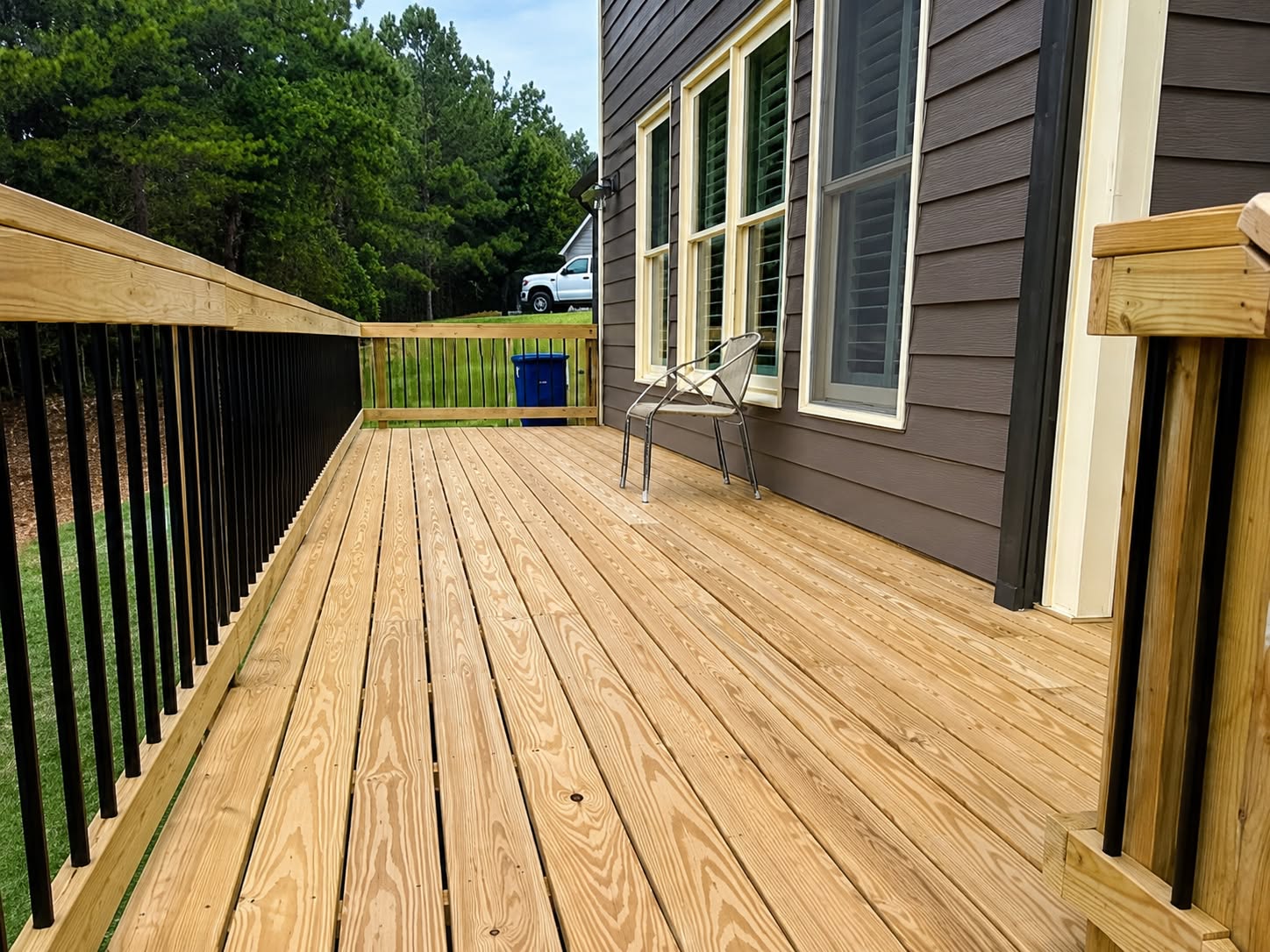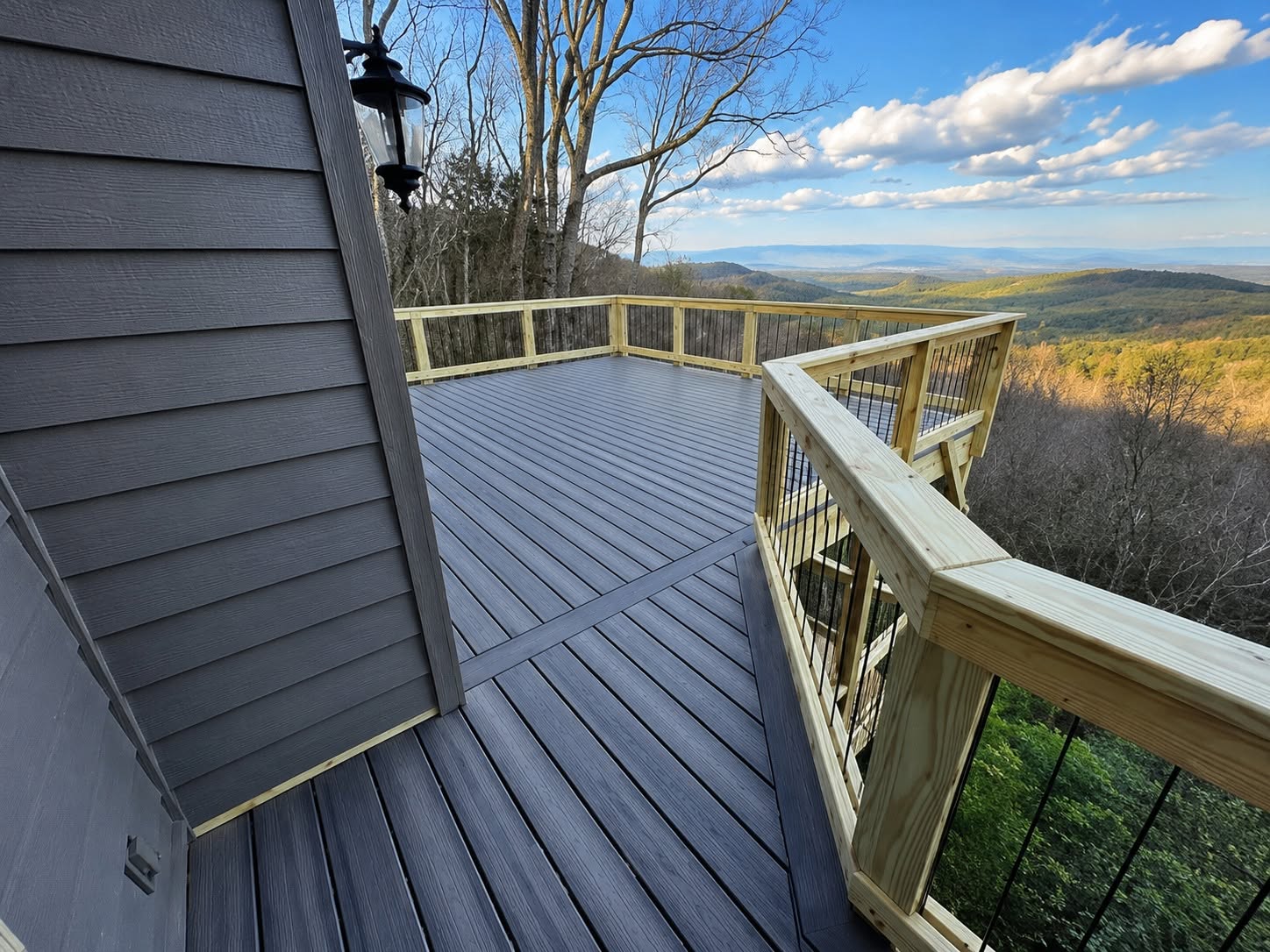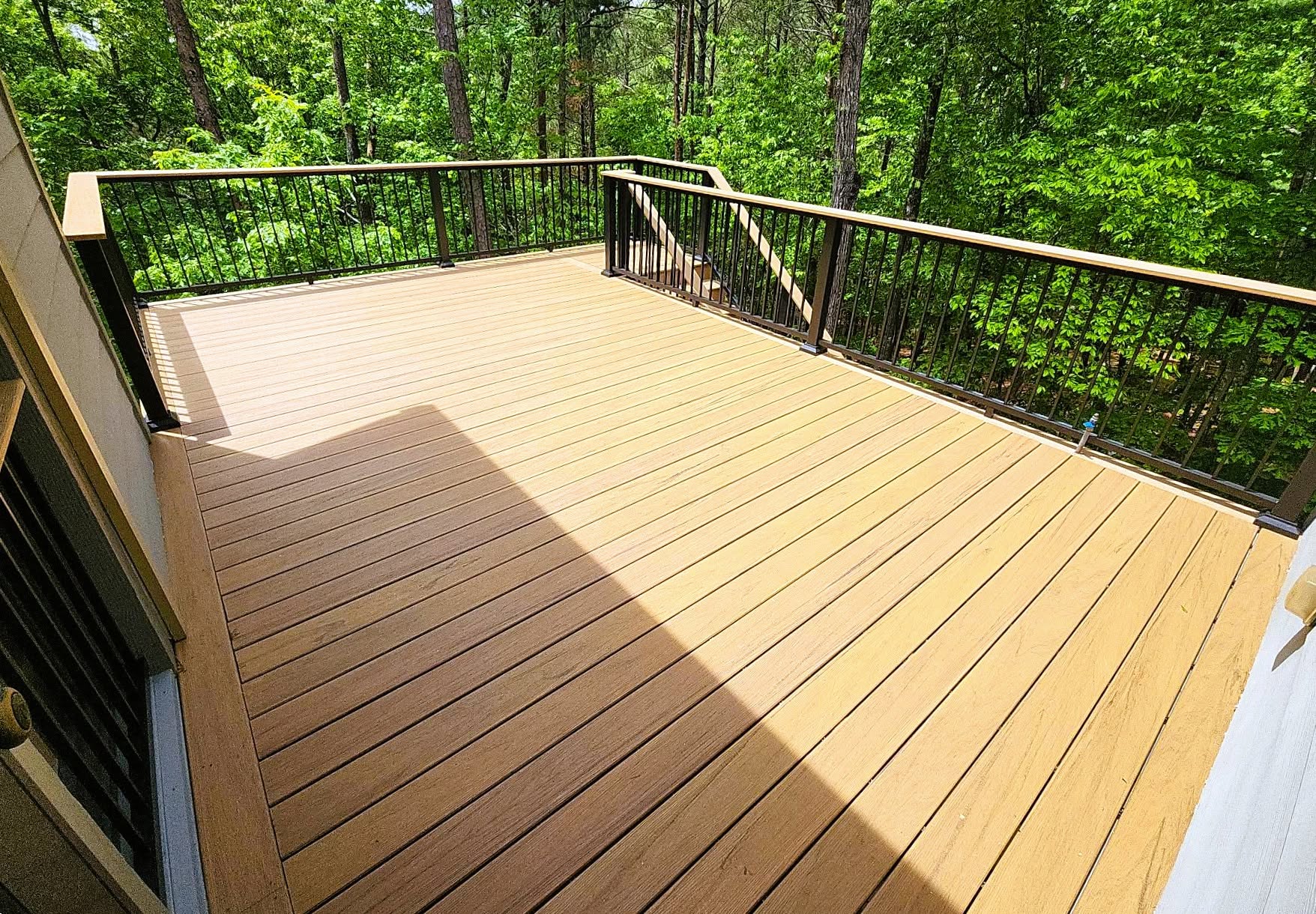

Quick Answer: The best deck skirting ideas for 2026 are horizontal slats, composite panels, and black or corrugated metal. Faux stone, board-and-batten with a hidden access door, planted borders, and framed lattice round out the list. Whatever style you choose, leave ventilation gaps and keep panels off the dirt. Add mesh behind the skirting to block animals, and build in an access panel so the space stays usable.
Deck skirting ideas are the fastest way to make a deck look finished. Skirting turns the shadowy gap underneath into a designed part of the structure. It also blocks the critters, hides the storage, and cleans up the view from the yard. Skirting is a design choice rather than a code requirement, so the style menu is wide open. Here are the seven approaches we install most across North Georgia, ordered from most requested to most traditional.
What Is Deck Skirting, and Do You Need It?
Deck skirting is the perimeter screen that encloses the open space between the deck surface and the ground. Fascia is its close cousin. Fascia trims the deck’s rim board edge, while skirting drops from the rim to the ground. No inspector will require skirting, but three practical jobs make it worth doing anyway. It finishes the look, keeps animals from homesteading under your deck, and hides whatever you store under there. On raised North Georgia decks, it also anchors a tall structure to its slope. That changes how the whole backyard reads.
1. Horizontal Slat Skirting
The most requested look we build right now. Evenly spaced horizontal boards, in wood or composite, wrap the deck in clean lines that read modern. The spacing between boards handles ventilation automatically. Run the slats in the decking color for a seamless block. Or paint them a deep charcoal for contrast against lighter siding. This is the style driving searches for modern deck skirting. It pairs naturally with the mixed-material designs in our decking trends guide.
2. Vertical Composite Skirting
Composite skirting matches a composite deck the way nothing else can. The panels come from the same material family as the boards above. Trex’s fascia line offers matching boards for every decking color, plus a Universal White. The panels use 95 percent recycled content and carry the same 25 to 50 year warranties as the decking. That means the skirt ages at the same rate as the deck instead of weathering ahead of it. As a TrexPro Platinum installer, this is our default recommendation on composite builds. No painting, no rot, and one consistent color story from rail to ground.
3. Metal Skirting: Black Panels and Corrugated Steel
Metal is the sleeper pick that keeps growing. Flat black panels deliver the crispest modern edge available. Corrugated steel brings a farmhouse-industrial texture that sits well against wood tones and stone. Metal shrugs off moisture, never feeds insects, and needs essentially no upkeep. That makes it a smart pick for the damp, shaded zones under North Georgia decks. Pair it with warm decking colors so the effect lands modern instead of cold.
4. Faux Stone Panels
Faux stone panels give a tall deck the visual weight of a foundation at a fraction of masonry cost. They excel on elevated and walkout decks. A long stretch of exposed posts can make those structures feel like they are on stilts. Stone-look skirting grounds the deck and matches Georgia’s stone and brick exteriors. It also hides a multitude of grading sins on sloped lots.
5. Board-and-Batten With a Hidden Access Door
Solid board-and-batten skirting turns the under-deck zone into genuinely concealed storage. Mowers, kayaks, and firewood disappear behind a clean cottage-style wall. The access door is what separates a professional job from a DIY headache. Frame it into the pattern so it blends into the design and still opens for real access. If you enclose it fully, ventilation gaps or vents become essential. Trapped moisture under a deck is how framing problems start.
6. Planted Borders and Partial Skirting for Low Decks
Low decks often need less skirting than homeowners think. When the gap is shallow, a planted border of shrubs or ornamental grasses screens it more softly than panels. A single band of horizontal skirting can also close the gap without building a wall. This is the budget-friendly end of the menu. On ground-hugging decks, where full panels would look oversized, it is often the best-looking answer too.
7. Framed Lattice, Done Right
Lattice earned its bad reputation from floppy diagonal sheets stapled to posts. Done right, it still works. Use heavy-duty lattice in a square grid, mounted inside a solid picture frame of trim. Paint it to match the deck or the house. The framing is everything, turning a builder-grade afterthought into a classic detail. If you came here searching for alternatives to lattice, options one through six are your answer. If the traditional look is the goal, this is how to do it well.
Skirting for Raised Decks vs Low Decks
Height changes the assignment. A raised deck carries tall panel runs, so vertical patterns, faux stone, and board-and-batten keep the proportions right. An access door is non-negotiable, because the space behind is too valuable to seal. A low deck wants the opposite: slim horizontal bands, planted screening, and simple solutions that stay in scale. On sloped lots, expect the skirting height to change along the run. That is exactly the kind of detail worth designing rather than improvising. Skirting is also one of the highest-impact pieces of a deck remodeling project. It updates the whole structure’s look without touching the framing.
Porch Skirting Ideas
Everything above works under a porch too, with one adjustment. Porches face the street more often than decks do, so porch skirting tends to run more formal. Framed lattice, board-and-batten, and brick or stone-look panels suit front porches. Match them to the house trim rather than the floor. The ventilation and access rules stay identical. Our porch construction team builds and skirts porches across North Georgia. Front-of-house versions get the same design attention as the deck out back.
Skirting vs Underdecking: Which One Do You Need?
They solve different problems and combine beautifully. Skirting screens the perimeter of the under-deck space. Underdecking is a ceiling and drainage system installed beneath a raised deck. It catches water and creates a dry outdoor room below. That is why underdecking searches around Ellijay and the mountain towns come from owners of tall walkout decks. If the goal is looks and critter control, skirting does it. If the goal is a dry living area under the deck, underdecking does it. Skirting then finishes its edges.
The Practical Rules Every Skirting Style Shares
Four rules keep any skirting choice out of trouble:
- Ventilate. Air needs to move under the deck, so leave gaps between boards or add vents to solid panels. Trapped moisture in a shaded under-deck zone works on framing year round in Georgia’s humidity.
- Stay off the dirt. Keep panels clear of ground contact so they shed water instead of wicking it. Let the ground slope away from the deck.
- Screen the critters. Galvanized mesh behind the skirting, with the bottom edge buried a few inches, is what actually keeps animals out. The panels alone are a suggestion; the mesh is the answer.
- Build the door. Whatever the style, frame in an access panel. Future you, retrieving the holiday decorations, will be grateful.
Color-wise, matching the decking makes the deck read taller and seamless. Contrasting with the house trim makes the skirting a feature.
Deck Skirting FAQ
What is the cheapest deck skirting idea?
Framed lattice and simple horizontal pressure-treated slats anchor the budget end, followed by planted borders on low decks. Composite, metal, and faux stone cost more up front and repay it in maintenance they never need.
How do you keep animals out from under a deck?
Mesh, not panels. Fasten galvanized hardware mesh behind the skirting and bury the bottom edge a few inches. Then keep the access door snug. Skirting alone slows animals down; the buried mesh is what stops them.
Does deck skirting need ventilation?
Yes. Enclosing the under-deck space without airflow traps ground moisture against your framing. Georgia humidity makes that a fast path to rot. Slat and lattice styles ventilate by design, and solid styles need gaps or vents built in.
What do you use for deck skirting?
The working menu covers wood or composite slats, composite fascia panels, and metal sheet or corrugated panels. Faux stone, framed lattice, and board-and-batten round it out. Match the material to the deck’s height, the house’s style, and your appetite for maintenance.
Can you install deck skirting yourself?
Simple slat or framed lattice skirting on a low, level deck is a reasonable DIY weekend. Tall runs, sloped grades, access doors, and composite or stone panel systems reward professional framing. Skirting only looks easy until the ground refuses to be level.
Finish the Deck From the Ground Up
North Georgia Elite Decks has built and finished decks across North Georgia since 2007. We hold TrexPro Platinum status and carry a 4.9 star rating from our clients. We design skirting into the project from the first drawing, not as an afterthought. Free on-site estimates in Jasper, Canton, Woodstock, Alpharetta, Cumming, and Ellijay.
Get your free estimate or call (404) 662-2273.