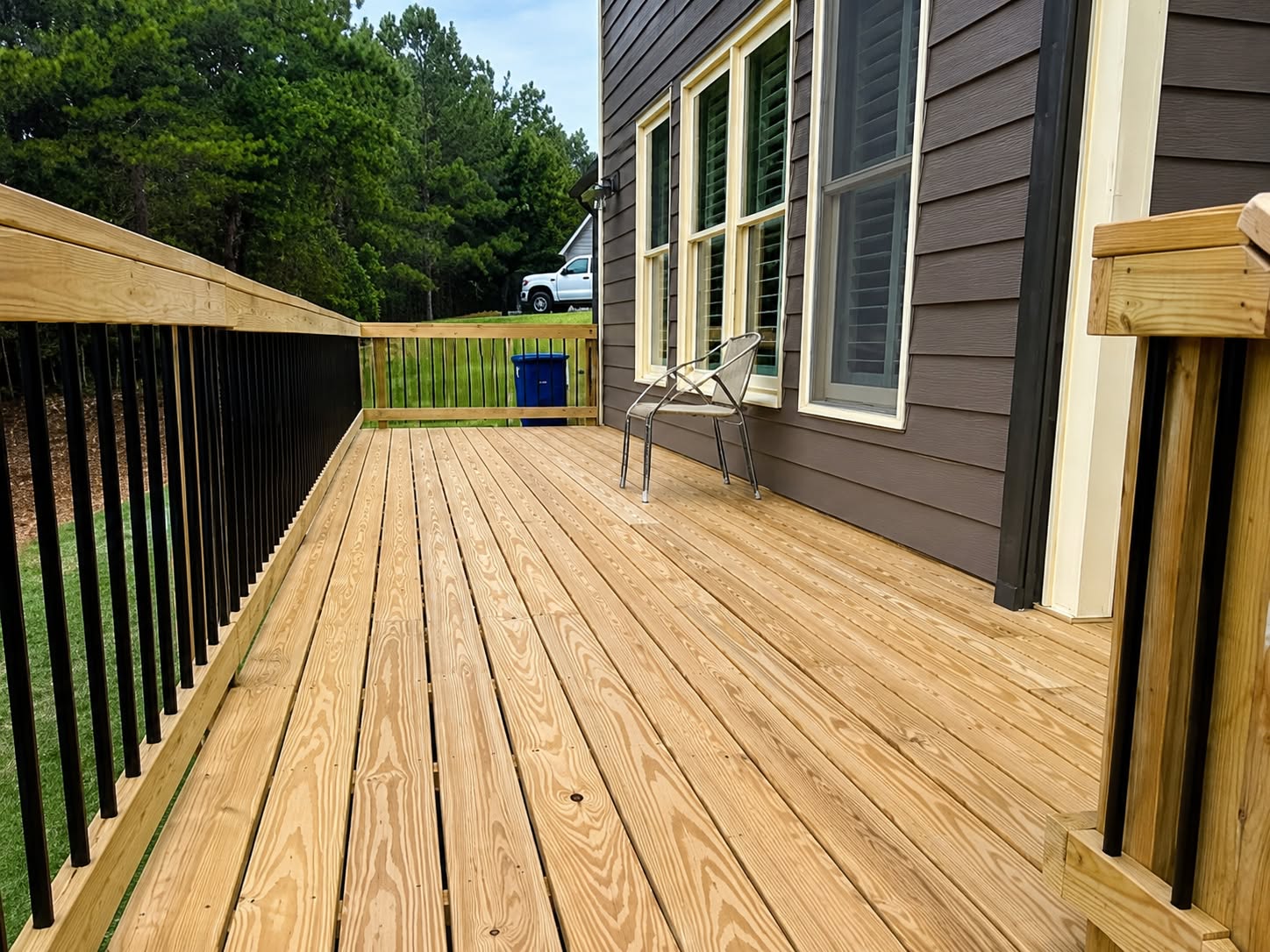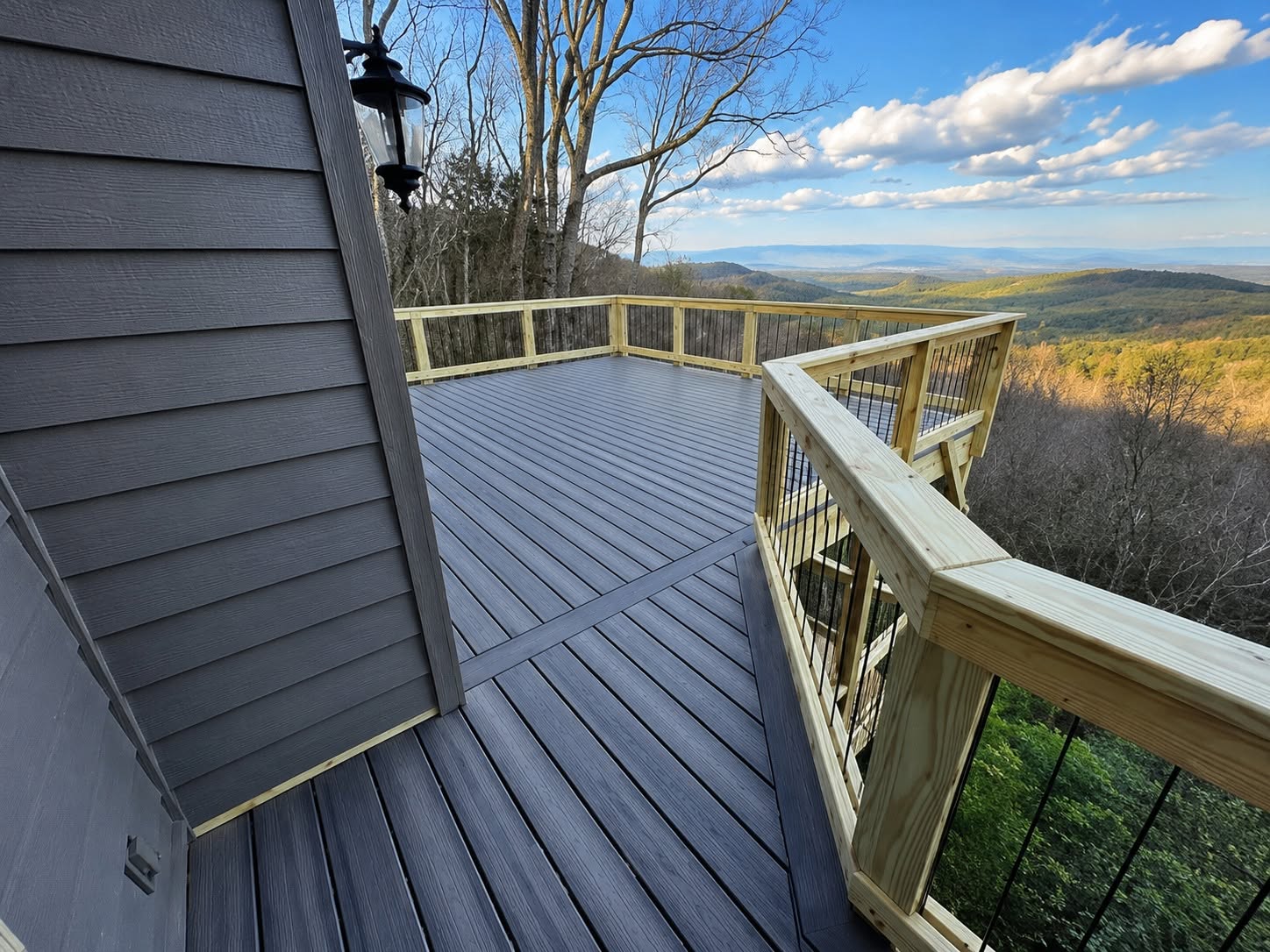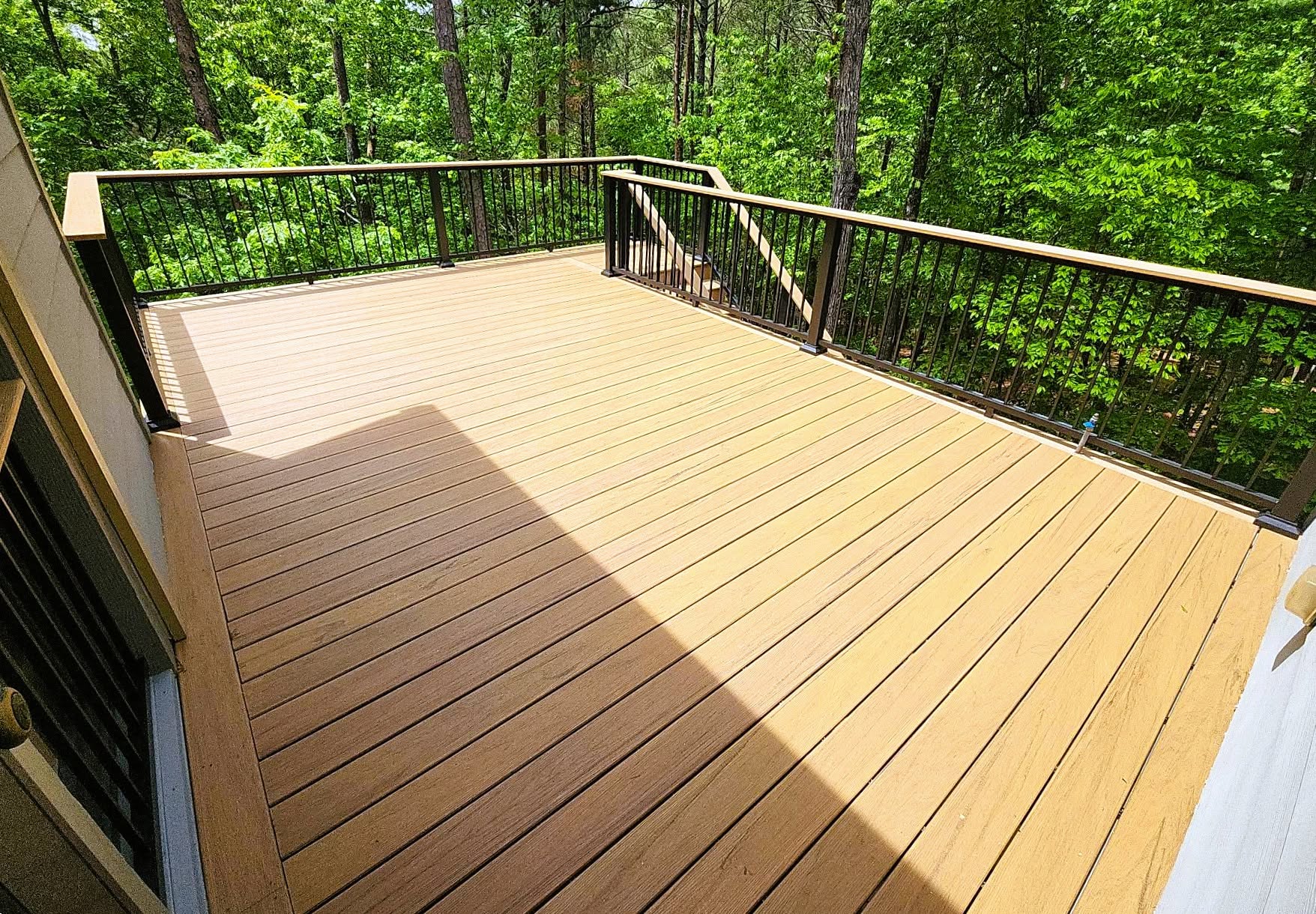

Quick Answer: Wood decking wins on upfront price and takes payment in maintenance: Georgia humidity puts wood on a permanent wash-and-restain cycle. Composite decking costs more on day one and then asks for almost nothing, shrugging off the rot, mildew, and fading that our climate uses against wood. Both resell well. If budget rules, pressure-treated wood is the honest choice. If you plan to stay and want your weekends back, composite is the one we install most, and there is a reason we became a TrexPro Platinum contractor.
Wood vs composite decking is the single biggest decision in a deck project, because the boards are what you see, touch, and maintain for the next twenty years. The honest comparison depends on where the deck lives, and this one is written for Georgia: our humidity, our pollen, our sun, and our resale market. We install both materials every week across North Georgia, so what follows is the conversation we have on real driveways, with the sales gloss removed.
Wood vs Composite Decking: The Quick Comparison
| Pressure-Treated Wood | Capped Composite | |
|---|---|---|
| Upfront cost | Lowest of the mainstream options | Meaningfully higher |
| Ongoing maintenance | Wash yearly, restain on a recurring cycle | Soap-and-water cleaning |
| Georgia humidity | Constant defense against rot and mildew | Resists both by design |
| Appearance over time | Weathers and grays without upkeep | Holds color for decades |
| Feel | Real wood grain and warmth | Wood-look surface, consistent boards |
| Resale cost recovery | 94.9 percent (national average) | 88.5 percent (national average) |
| Warranty | Lumber treatment warranties | Limited warranties of 25 years and up |
What Is the Best Decking Material?
The best decking material is the one that matches three things: your budget, your maintenance appetite, and how long you plan to own the deck. For most homeowners the real contest is pressure-treated pine versus capped composite, with cedar as the premium wood alternative and PVC as the premium synthetic. There is no universal winner, and anyone who names one without asking about your plans is selling something. The two sections below make each material’s best case, and the Georgia climate section after them is usually what settles it.
The Case for Wood Decking
Wood is the value play and the purist’s choice. Pressure-treated pine costs less than any composite, takes any stain color you can imagine, and delivers the grain, warmth, and smell that only real lumber has. Treated properly, the lumber itself is engineered for outdoor life, with preservatives that resist rot and insects, which is why it remains the framing material under nearly every deck, composite ones included. Cedar steps up the beauty and natural resistance for a higher price.
The price of wood’s price is the calendar. In Georgia, a wood surface needs regular washing and a recurring stain-and-seal cycle to stay ahead of the climate, and skipped cycles show up as graying, checking, and eventually soft boards. Owners who love the ritual, or who use our deck staining and painting crew to handle it, keep wood decks beautiful for decades. Our pressure-treated wood guide covers the lumber itself in full depth.
The Case for Composite Decking
Composite boards are made from wood fibers blended with recycled plastics, capped in a polymer shell. That is what composite deck boards are made of, and it explains the behavior: the cap is why composite resists the staining, fading, rot, and insects that work on bare wood. Leading manufacturers back their boards with limited warranties of 25 years and up, and Trex runs 25, 35, and 50 year tiers depending on the line. Maintenance drops to washing off the pollen.
Modern boards also retired the complaints that early composite earned. Today’s capped lines carry realistic grain, deeper color variation, and better heat behavior than the boards of fifteen years ago, and the line-by-line differences are real, which is why our Trex decking lines comparison exists. What composite cannot do is cost less up front, and pretending otherwise is how homeowners end up surprised. See what we install and why on our composite decking page.
How Georgia’s Climate Decides This Comparison
Climate is the referee, and Georgia’s climate leans composite. Four local pressures do the pushing:
- Humidity, most of the year. Moisture is wood’s enemy and Georgia delivers it relentlessly, which is why the restain cycle here runs tighter than the national advice printed on the stain can.
- Pollen and shade mildew. Spring buries every deck in yellow, and shaded North Georgia lots grow mildew on any surface. Both materials need the wash; only wood needs the film of stain underneath defended.
- Sun and heat. Full southern exposure fades wood stain and heats every dark board, wood or composite alike. Lighter colors and, on the composite side, heat-mitigating board technology are the answers.
- Mild winters. Our freeze-thaw is gentle by national standards, which spares both materials and takes the one climate argument for wood’s flexibility mostly off the table.
A wood deck absolutely works in Georgia. It just works like a garden: beautiful in proportion to the attention it gets. Composite works like siding: install it correctly and let the climate try.
The Maintenance Math
Translate the materials into hours and the decision sharpens. A wood deck asks for an annual wash plus a recurring restain, which means either your weekends or a professional’s invoice, on repeat, for the life of the deck. A composite deck asks for the wash alone. Over a decade, that difference compounds into the real gap between the materials, and it is the reason the upfront price comparison alone always flatters wood. Whichever way you go, our deck maintenance team keeps the schedule so you never have to think about it.
What About Resale Value?
Both materials resell well, and the national data is refreshingly close. The Cost vs. Value Report from Zonda puts cost recovery at 94.9 percent for wood deck additions and 88.5 percent for composite. Wood’s higher percentage comes from its lower build cost rather than higher buyer enthusiasm, while composite’s low-maintenance story is itself a selling point when the listing goes live. The resale takeaway: neither material is a mistake, so make the decision for your ownership years, and let resale be the tiebreaker it deserves to be rather than the driver.
The Sustainability Question
Both materials carry an honest environmental story, which is why the sustainable decking searches split. Wood is renewable, regionally grown, and biodegradable, with treatment chemistry as its asterisk. Composite locks recycled plastic and reclaimed wood fiber into a product that lasts decades and never consumes a drop of stain, with plastic content as its asterisk. Our take: the greenest deck is the one built once and maintained well, and both materials can be that deck.
So Which Should You Choose?
Our driveway-conversation decision rules, in the order we actually ask them:
- Budget is the constraint? Pressure-treated wood, without apology. A well-built wood deck beats a postponed composite one every time.
- Staying ten-plus years, or allergic to maintenance? Composite. The upfront premium amortizes into the cheapest cost-per-year on the menu.
- Shaded, humid, or wooded lot? Composite widens its lead where mildew pressure is highest.
- In love with real wood? Wood, eyes open, with the staining schedule on the calendar from day one.
- Still torn? Price both. Our 200 square foot deck cost guide shows the honest math for each material on the same deck.
Wood vs Composite Decking FAQ
Is composite decking stronger than wood?
Neither surface makes the deck stronger, because capacity lives in the framing underneath, and that framing is pressure-treated lumber either way. Board to board, composite resists surface damage and decay better, while wood tolerates wider joist spacing on some products. For what a deck can actually hold, the structure decides.
How long does a composite deck last?
Leading composite lines carry limited warranties of 25 years and up, with Trex offering 25, 35, and 50 year tiers, and the boards routinely outlive the marketing. In practice a composite surface lasts as long as the framing under it stays sound, which shifts the longevity question to the structure and its inspections.
Is pressure treated wood good for decks?
Yes, it is the standard. The treatment process drives preservatives into the lumber specifically so it can live outdoors and resist rot and insects, which is why pressure-treated pine frames nearly every deck built in Georgia and surfaces the affordable ones. Its condition ten years from now depends on the maintenance it receives.
Does composite decking get hot?
Any dark board in full Georgia sun gets hot, wood or composite. Color choice is the biggest lever, lighter boards stay noticeably cooler, and newer composite lines add heat-mitigating technology to the cap. On full-sun southern exposures, we steer clients toward lighter tones in either material.
Is composite decking eco friendly?
Its core is recycled content, wood fiber and reclaimed plastic that would otherwise be waste, sealed into a board that skips decades of stain and sealer. That is a genuine story, with plastic as the honest asterisk. Gardeners also ask about composite for raised beds precisely because it contains no chemical wood preservatives; check the manufacturer’s guidance for that use.
Walk Both Materials With a Builder Who Installs Both
North Georgia Elite Decks has built wood and composite decks across North Georgia since 2007. We hold TrexPro Platinum status, carry a 4.9 star rating from our clients, and we bring samples of both materials to every free on-site estimate, because the right answer lives on your lot, in your shade, and on your calendar. Serving Jasper, Canton, Woodstock, Alpharetta, Cumming, and Ellijay.
Get your free estimate or call (404) 662-2273.