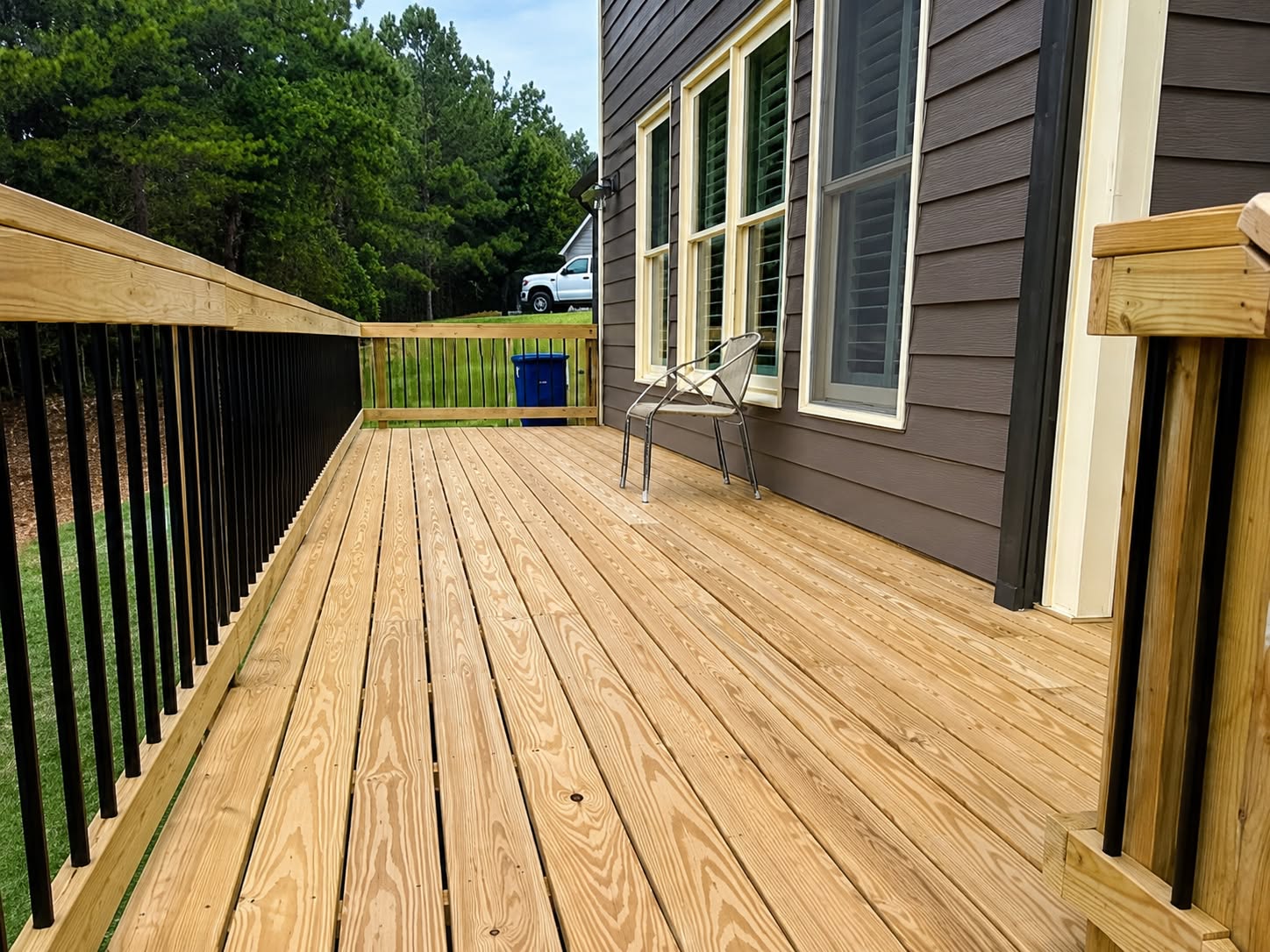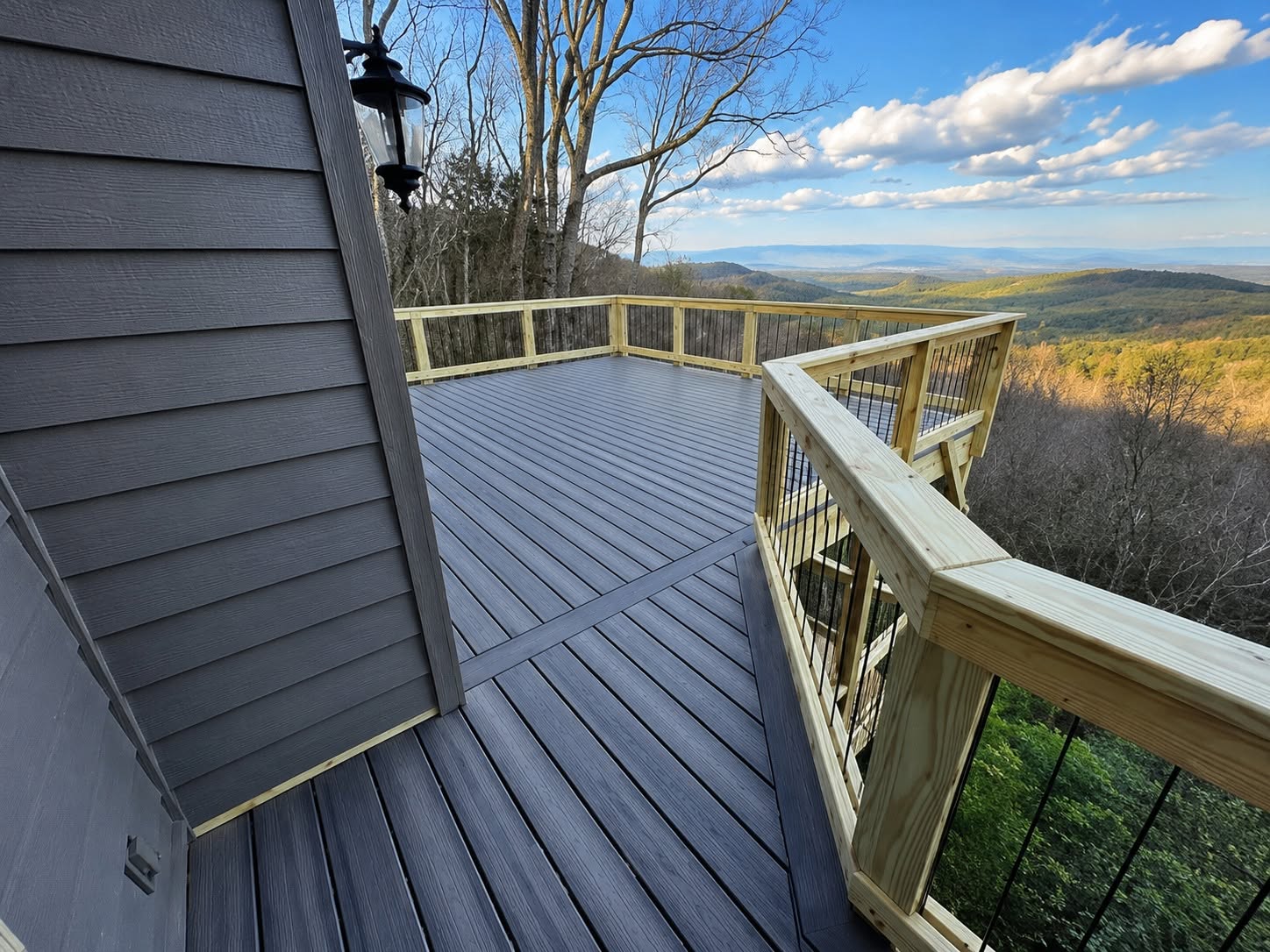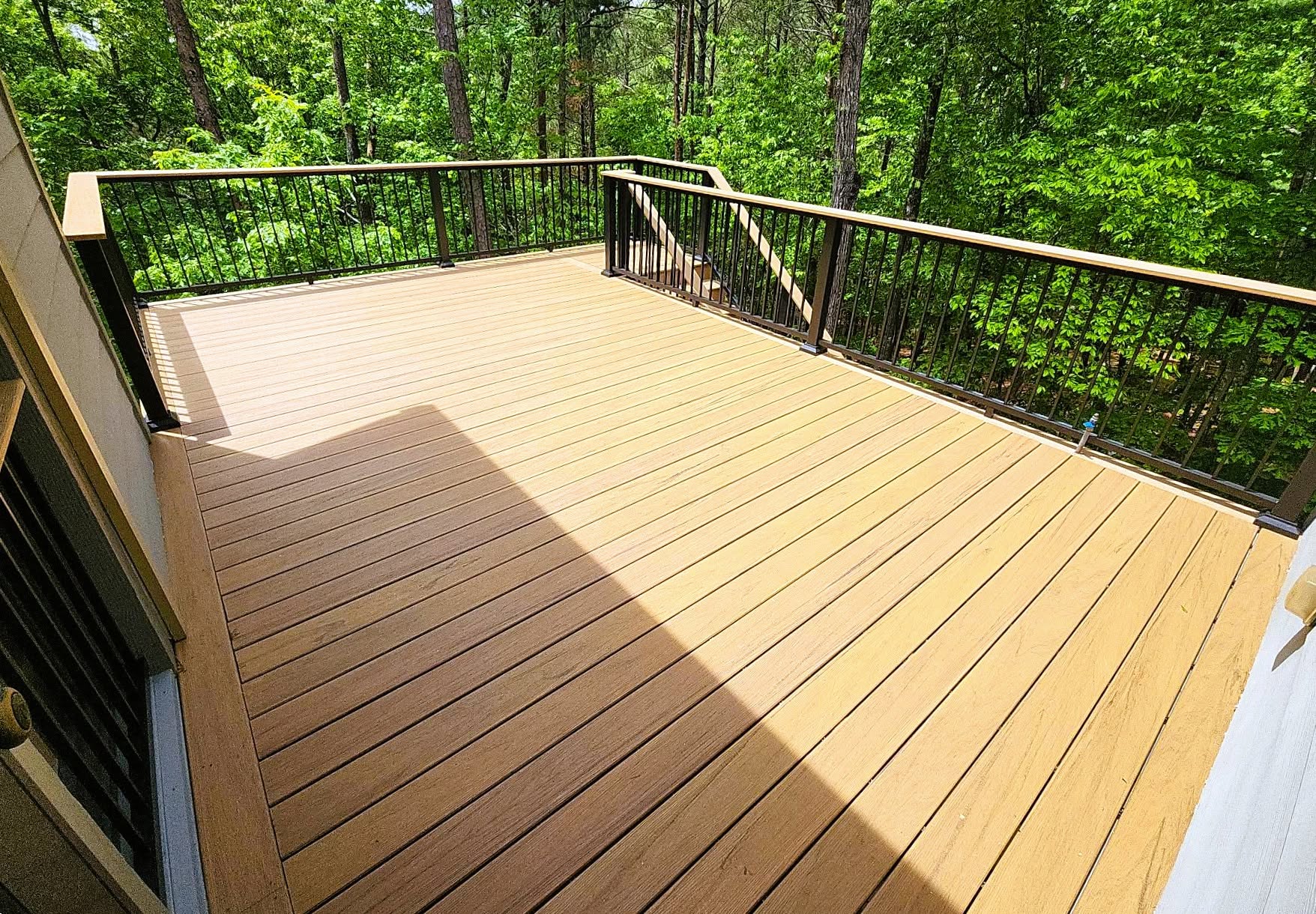

Trex is not one product. It is five different deck boards wearing the same logo, and the difference between the cheapest line and the top of the range shows up in how the deck looks, how hot it gets in July, how it shrugs off a dragged grill, and how long the warranty runs. This guide compares every Trex decking line sold in 2026, in plain language, from the crew that installs them across North Georgia as a TrexPro Platinum builder.
If you only remember one thing, make it this: the lines are tiers, not flavors. Each step up buys better capping, more realistic grain, and stronger long-term protection.
The Five Trex Decking Lines in 2026
Trex currently sells five decking collections. From entry level to top shelf:
| Line | Tier | Capping | Grain and look | Standout trait |
|---|---|---|---|---|
| Trex Enhance | Good | 3-sided | Solid colors, light grain | Lowest cost, scalloped board bottom |
| Trex Select | Better | 3-sided | Cleaner monochrome colors | Balanced price and durability |
| Trex Transcend | Best | 4-sided | High-definition wood grain | The long-running flagship |
| Trex Transcend Lineage | Premium plus | 4-sided | Smooth, modern color blends | Heat-mitigating cap that stays cooler in sun |
| Trex Signature | Luxury | Mineral-based composite | Trex’s most realistic hardwood look | A genuinely different board from everything below it |
Every line shares the same DNA: composite boards made from roughly 95 percent recycled material that never need sanding, staining, or sealing. What changes as you climb the range is the shell around that core and the realism of the surface. You can see the manufacturer’s own side-by-side on the official Trex comparison page, and the rest of this guide translates it into real-deck terms.
Trex Decking Grades and Levels, Explained
Homeowners search for Trex “grades” and “levels” constantly, and the honest answer is that Trex does not use either word. The lineup works like a good-better-best ladder with two extra rungs on top:
- Good: Enhance. Entry-level boards with a scalloped underside that uses less material, which is where the savings come from.
- Better: Select. Solid-profile boards, a thicker protective shell than Enhance, and a tighter color palette.
- Best: Transcend. Four-sided capping, deep wood-grain texture, and the widest color range in the lineup.
- Premium plus: Transcend Lineage. Everything Transcend does, plus a cap engineered to reflect heat so the surface stays noticeably cooler barefoot.
- Luxury: Signature. A mineral-based composite rather than the standard wood-plastic recipe, built to imitate high-end hardwood as closely as composite currently gets.
So when someone asks which “grade” of Trex to buy, they are really asking which rung of this ladder matches their budget and their sun exposure. The matchups below settle the most common head-to-heads.
Trex Transcend vs Enhance
This is the comparison we hear most at estimates, because it is the biggest jump in the range: the flagship against the entry point.
Choose Transcend when the deck is a long-term centerpiece. The four-sided cap protects the board on every face, the grain looks like milled hardwood instead of printed plastic, and the color selection is the deepest Trex offers. It also holds up better to furniture drag, dog claws, and grill traffic.
Choose Enhance when budget rules the project or the deck is a lower-traffic space like a small landing or a rental refresh. The scalloped bottom makes it lighter and cheaper, and it still beats wood on maintenance by a mile. The honest tradeoff: a thinner shell and simpler surface, which means a little less scratch resistance and a flatter look.
Our field rule: if you plan to live on the deck, Transcend earns its price. If the deck’s job is simply to exist without rotting, Enhance does that well.
Trex Signature vs Transcend
The newest question in the lineup, and the rare case where the answer is “these are different products, not different trims.”
Transcend is the best version of the classic Trex formula: a wood-plastic composite core wrapped in a four-sided protective shell. Signature moves to a mineral-based composite board. In practice that buys the most convincing hardwood look Trex has ever shipped, excellent stability, and top-of-range performance. It also carries the top-of-range price.
Choose Signature when the deck is a showpiece and the budget can follow the ambition, especially where you want composite that reads as real wood from two feet away. Choose Transcend when you want proven premium performance and a broader color catalog at a friendlier number. Nobody walks onto a Transcend deck and calls it a compromise.
Trex Select vs Enhance
The value-tier decision. The two look similar on a shelf, and the differences show up over years, not days.
Select runs a solid board profile with a tougher shell and slightly richer, cleaner colors. Enhance saves money with its scalloped underside and a lighter build. For covered porches, shaded decks, and gentle household traffic, Enhance is a fair buy. For full-sun Georgia exposure, kids, dogs, and furniture that moves every weekend, Select’s extra durability is the smarter middle path, and it usually costs meaningfully less than the jump to Transcend.
Trex Transcend vs Transcend Lineage
Same family, one big difference: heat. Lineage boards carry Trex’s heat-mitigating cap technology, engineered to reflect more sunlight so the walking surface stays cooler than a standard composite board in the same sun. Lineage also skews modern in its color blends, with smooth, lighter tones, while classic Transcend leans warm and woodsy with heavier grain.
On a shaded North Georgia deck, standard Transcend is usually the right call. On a south- or west-facing deck that bakes from noon to sunset, the barefoot difference of Lineage is the feature people thank us for in August.
What Is Trex Decking Made Of?
Every standard Trex line is built from about 95 percent recycled content: reclaimed wood fiber and recycled plastic film, blended into a composite core and wrapped in an engineered outer shell. The shell is what fights fading, staining, mold, and scratches, which is why the capping story (three-sided vs four-sided vs heat-mitigating vs mineral-based) is the real difference between the lines. None of them ever need stain or sealant; cleaning is soap, water, and a soft brush.
If you are still weighing composite against lumber in the first place, our wood vs composite decking guide for Georgia covers that decision in full.
Trex vs TimberTech
The other question that comes up at nearly every estimate. Both are top-tier composite brands, both cap their boards, both far outlast bare wood. The practical differences: Trex offers the deepest brand recognition, the largest installer network, and a five-tier range that starts at a friendlier entry price. TimberTech’s upper lines compete hard on looks and also perform well in heat.
Our position is simple and biased for a reason: we install Trex as a TrexPro Platinum builder, which means factory-recognized training and installs that keep the manufacturer warranty fully intact. Whichever brand you choose, buy the installer’s certification along with the board.
Which Trex Line Is Best for a Georgia Deck?
After years of building Trex across Cherokee, Pickens, Forsyth, Fulton, Gilmer, Fannin, and Dawson counties, here is how we actually spec it:
- Full-sun southern exposure: Transcend Lineage. The cooler surface is not a gimmick here; Georgia sun finds every deck without shade.
- The family deck you will use for decades: Transcend. The durability-to-price balance that made Trex famous.
- Style-first projects and modern builds: Signature if the budget allows, Lineage’s lighter palette if not.
- Covered porches and shaded decks: Select hits the sweet spot; Enhance works where budget leads.
- Rental properties and quick refreshes: Enhance, installed correctly, still outlives and out-simplifies any wood deck.
Every line also pairs with Trex and other railing systems we install, from composite to cable and hog wire.
Trex Decking Cost by Line
Exact pricing moves with board profile, color, and the lumber and freight market, so treat any fixed per-foot number you read online as a snapshot. What holds steady is the ladder: Enhance costs the least, Select sits a step up, Transcend and Lineage occupy the premium band, and Signature tops the range. Labor, framing, railing, and stairs matter as much as the board choice in a final number.
For a grounded range on your specific project, run your dimensions through our deck cost calculator, and if you would rather spread the investment out, deck financing is available on qualifying projects.
Trex Decking Lines: Common Questions
What is the best Trex decking line?
Signature is the best board Trex makes; Transcend is the best value in the premium tier and the line we install most. “Best” for your deck depends on sun exposure, traffic, and budget, which is exactly what the matchups above are for.
Do the Trex lines have different warranties?
Yes. Every line carries a limited residential warranty covering material defects plus fade and stain protection, and the coverage length steps up with the tier, with the longest terms at the top of the range. Confirm the current warranty terms for your line at trex.com before you buy, and use a recognized installer so workmanship never voids coverage.
Was Trex Toasted Sand discontinued?
Yes. Trex retires colors from time to time as the palette evolves, and Toasted Sand is among the discontinued options. If you are matching or extending an older deck, bring us a board; there is usually a current color that blends convincingly, or a border design that makes the transition intentional.
Does Trex decking fade?
The capped shell on every line is engineered to resist fading, and the higher tiers resist it best. Expect minor, even weathering in the first months as the board settles into its final color, not the chalky graying that bare wood suffers.
Can you mix Trex lines on one deck?
Yes, and it is a smart budget play. We regularly run a premium line on the main walking surface with a different tone or tier as a border, or spec the high-traffic upper deck in Transcend and a lower landing in Select.
Does it matter who installs Trex?
More than most homeowners expect. Composite has its own rules for gapping, fastening, and framing, and installation mistakes are the number one cause of composite deck problems we are called to fix. NGE is a TrexPro Platinum installer, the certification tier that reflects factory-recognized training and a track record of Trex builds.
Ready to Pick Your Line?
The fastest way to choose is to stand on your own deck with real samples in hand, in your actual light. We bring Enhance, Select, Transcend, Lineage, and Signature boards to every composite decking estimate, walk the tradeoffs honestly, and quote the build in writing. Reach out to schedule your free on-site visit, and bring the hard questions; comparing decking lines is the part of this job we genuinely enjoy.