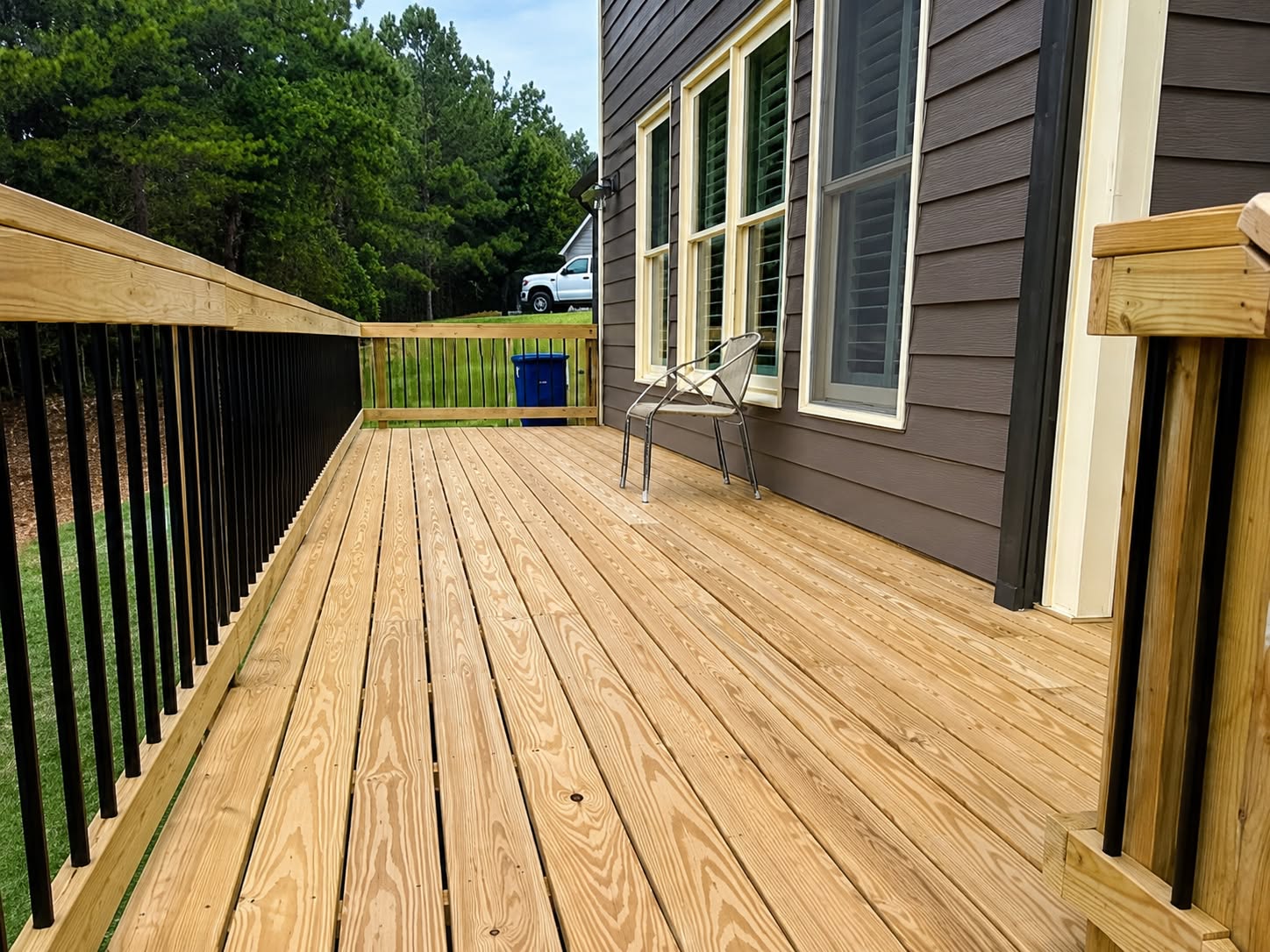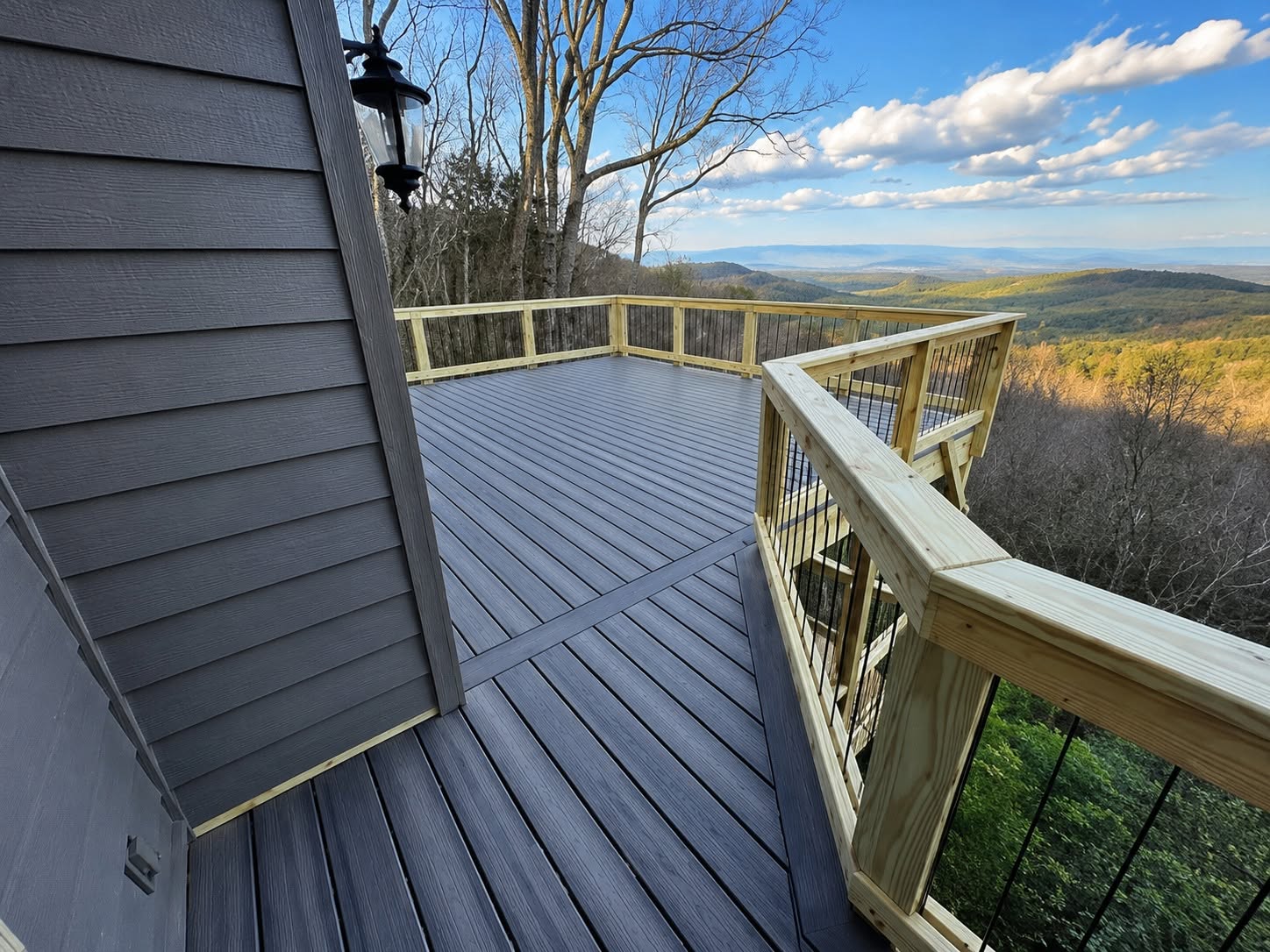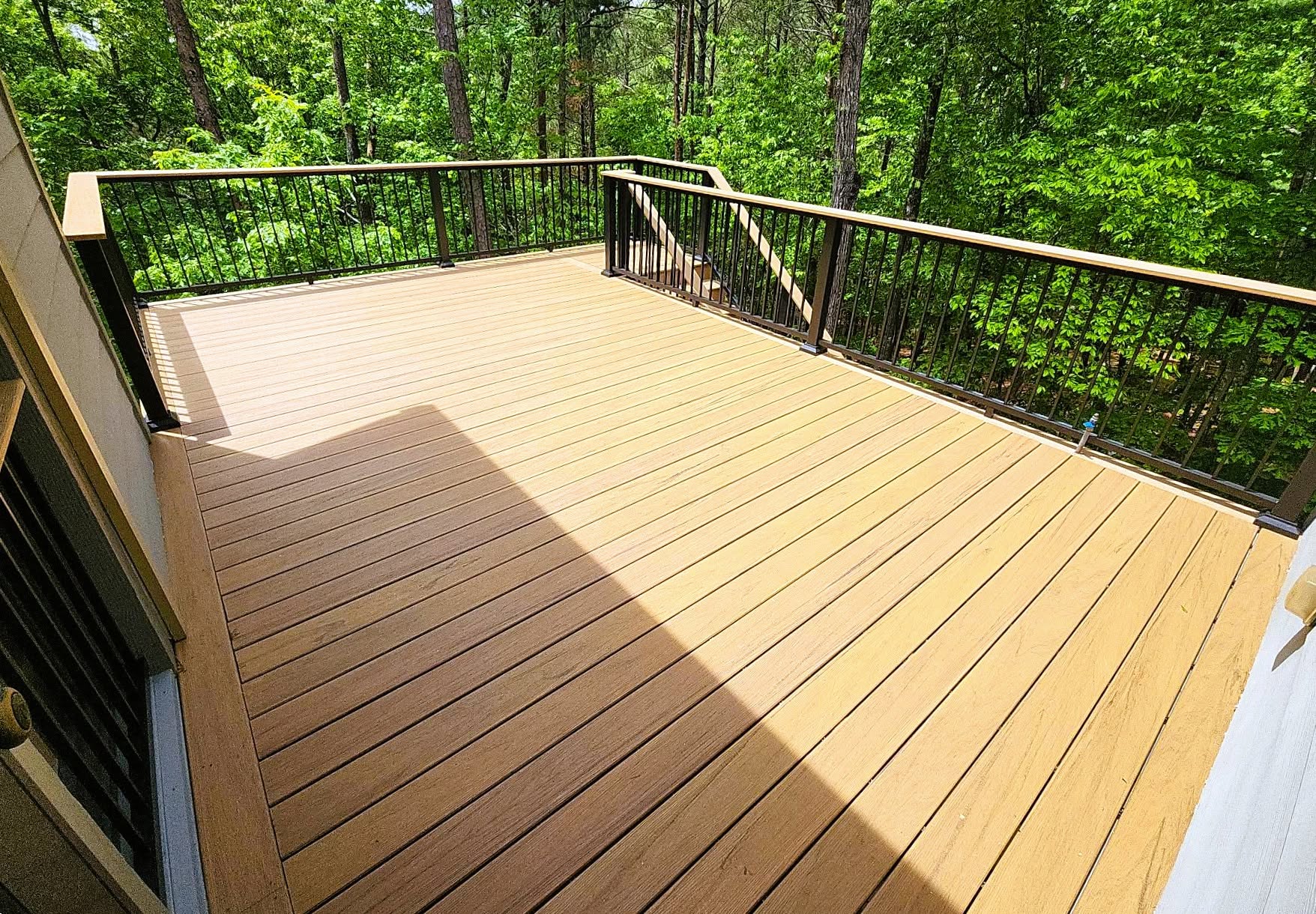

Quick Answer: Residential deck railing height code in Georgia requires guards at least 36 inches tall on any deck surface more than 30 inches above grade. On stairs, the guard measures at least 34 inches from the tread nosing, and a graspable handrail sits between 34 and 38 inches. Openings anywhere in the railing must reject a 4 inch sphere, and the whole assembly must resist a 200 pound concentrated load. Porch railings follow the same rules, and commercial projects require taller 42 inch guards.
Deck railing height code questions decide more inspection outcomes than any other part of a deck, because railings are the life-safety system that keeps people from falling. This guide covers every guard and handrail requirement in depth: deck versus porch rules, stair guards versus handrails, the sphere tests, infill options like cable and hog wire, strength requirements, and how to bring an older railing up to today’s code.
Georgia reviews all of this under the state’s current residential code, and you can see the adopted editions on the Georgia DCA’s Current State Minimum Codes page. For the full picture of every deck rule beyond railings, start with our Georgia deck building codes guide and come back here for the railing depth.
What Is the Deck Railing Height Code?
36 inches is the number for residential decks. Any deck surface more than 30 inches above the ground needs a guard, and that guard must stand at least 36 inches tall measured from the walking surface. Taller is always allowed, which is why many homeowners on high decks choose 42 inch guards for extra security even where 36 passes.
Two situations change the number. Commercial and multifamily projects fall under the building code rather than the residential code, and those guards must reach 42 inches. And decks 30 inches or lower technically need no guard at all, though we still recommend one anywhere kids, pets, or stairs are involved.
Is Porch Railing Height Code the Same as Deck Railing Code?
Yes. A porch is a walking surface just like a deck, so the standard porch railing height is the same 36 inch guard, triggered by the same 30 inch height rule, with the same opening and strength requirements. The roof over a porch changes the framing rules, and it changes nothing about the guards.
Where porches differ in practice is the connection details: porch guards often mount to roof posts, and those connections still have to hit the same strength numbers as a free-standing deck rail. Our porch construction team builds screened and covered porches to those specs across North Georgia every week.
Stair Railing Code: Guards vs Handrails
Stairs carry two separate requirements, and mixing them up is the most common railing confusion we see:
- The stair guard protects the open side of the stairway from falls. It must measure at least 34 inches vertically from the tread nosing.
- The graspable handrail gives your hand something to hold. It must sit between 34 and 38 inches above the nosings, run continuously along the flight, and be shaped so a hand can actually grip it. A flat 2×6 laid on top of posts fails the graspable test.
A stairway with four or more risers requires a handrail. On many deck stairs, one properly shaped rail does double duty as both guard and handrail, which is legal as long as it satisfies both sets of numbers at once.
The Full Railing Spec Sheet
| Requirement | The Number | Where It Applies |
|---|---|---|
| Guard height, residential deck or porch | 36 inches minimum | Any surface over 30 inches above grade |
| Guard height, commercial or multifamily | 42 inches minimum | Building-code projects |
| Stair guard height | 34 inches minimum from nosing | Open sides of stairs |
| Graspable handrail | 34 to 38 inches, continuous, grippable | Stairways with 4 or more risers |
| Guard openings | Must reject a 4 inch sphere | Everywhere in the guard |
| Stair triangle opening | Must reject a 6 inch sphere | Between tread, riser, and bottom rail |
| Strength | 200 pound concentrated load | Top of guard and handrail, any direction |
Infill Options: Balusters, Cable, Hog Wire, and Glass
The code cares about openings and strength, and it does not care what the infill is made of. That is why every modern railing style can pass inspection when built correctly:
- Wood or metal balusters remain the baseline. Spacing them at 3 1/2 inches clear keeps you safely inside the sphere rule even as wood moves with the seasons.
- Cable railing passes when the cables stay tensioned tightly enough that a 4 inch sphere cannot push through. Tension is the whole game: loose cable is the number one way a beautiful cable rail fails a final.
- Hog wire and welded panels pass easily, because the grid openings sit well under 4 inches. They are also the most kid-proof and pet-proof infill we install, which is exactly what families searching for child and pet-safe deck railing solutions are after.
- Glass panels pass when the panel product is rated for guard use and the framing meets the load numbers.
Horizontal infill like cable and hog wire is permitted under the residential code as long as the openings and strength requirements are met. A few inspectors take a harder look at climbability with young children, so on family decks we often recommend the panel styles. Our railings division installs code-compliant cable, Wild Hog, and traditional systems, and our deck railing guide compares the styles and materials side by side.
How Strong Does a Deck Railing Have to Be?
Strong enough to resist a 200 pound concentrated load pushing outward on the top rail, which is the force of an adult stumbling into it hard. Height gets the attention, but strength is what inspectors actually test with a firm shake, and it is where most aging railings fail.
Strength lives in the post connection, never in the pickets. A railing post lagged into nothing but the rim board will wobble no matter how pretty the infill is. Proper blocking, through-bolts, and hardware at every post are what turn a 36 inch rail into a rail that actually holds 200 pounds. If your railing moves when you push it, treat that as a failed test today rather than a surprise later.
Bringing an Old Deck Railing Up to Code
Older decks were built to older rules, and the gap shows: 32 inch guards, 5 inch baluster gaps, and post connections that were never bolted. An existing railing is generally allowed to remain as built, but the moment you replace it, the new railing must meet today’s requirements, and many counties want railing replacements reviewed precisely because guards are a life-safety element. Our Georgia deck permit guide covers when that review applies.
The practical retrofit path: check your current guard height, run the sphere test with a real 4 inch ball, shake every post, and probe the post bases for rot. Any failure puts railing replacement at the top of the repair list, ahead of cosmetic work. Not sure what shape yours is in? Our deck inspection checklist walks the whole structure, railings included.
Deck Railing Height Code FAQ
What is the standard height for a deck railing?
36 inches for residential decks and porches in Georgia, measured from the walking surface to the top of the guard. Commercial and multifamily projects require 42 inches. Building taller than the minimum is always allowed and often smart on high decks.
Does a low deck need a railing?
Code stops requiring a guard once the deck sits 30 inches or less above grade. We still recommend railings on any deck with stairs, small children, or elderly guests, because the fall that hurts someone does not check the height rule first.
How many stairs require a handrail?
Four or more risers. At that point the stairway needs a continuous, graspable handrail set between 34 and 38 inches above the tread nosings. Shorter runs skip the handrail requirement, though the open sides may still need a guard depending on height.
Do porch railings have to meet the same code as deck railings?
Yes. Same 36 inch height, same 4 inch sphere rule, same 200 pound strength requirement. A roof overhead changes nothing about the guard rules, and screened porches still need compliant guards behind the screen when the floor sits above the 30 inch trigger.
Can deck railings be horizontal, like cable or hog wire?
Yes. The residential code permits horizontal infill as long as every opening rejects the 4 inch sphere and the assembly meets the strength numbers. Keep cable properly tensioned, and on decks with young climbers, consider panel infill like hog wire, which delivers the horizontal look without the ladder effect.
Railings That Pass the Shake Test
North Georgia Elite Decks has built and replaced code-compliant railings across North Georgia since 2007. We hold TrexPro Platinum status, carry a 4.9 star rating from our clients, and we install cable, Wild Hog, and traditional railing systems that pass the sphere test, the shake test, and the final inspection the first time. Free on-site estimates in Jasper, Canton, Woodstock, Alpharetta, Cumming, and Ellijay.
Get your free estimate or call (404) 662-2273.