Adding on to a deck feels like a small project. You already have the deck. You just want more of it. But once you add new footings, new framing, or new stairs, the county sees new construction.
This guide explains when you need a permit to extend a deck and which projects trigger one. It also walks through how the process works. For the general permit rules, see our guide to deck permit requirements in Georgia.
Do You Need a Permit to Extend a Deck?
Yes. In most North Georgia counties, extending a deck requires a building permit. An extension adds new structure, so it follows the same rules as a new deck.
County rules make this clear. Cherokee County’s building inspections page lists additions and decks among the work that requires a building permit. The same page notes that minor repairs for routine maintenance do not.
That line between repair and new structure is the key. Replacing a few boards is maintenance. Making the deck bigger is construction. Our deck additions team treats every extension as a permitted project from the start.
Addition Projects That Usually Need a Permit
Most projects that change the size, height, or structure of a deck need a permit. These are the common ones:
- Bigger footprint: Extending the deck out or to the side with new footings and framing.
- Second level: Adding a lower or upper tier.
- New stairs: Adding a stairway or moving an existing one.
- Roof or pergola: Adding a roof, pergola, or other overhead structure.
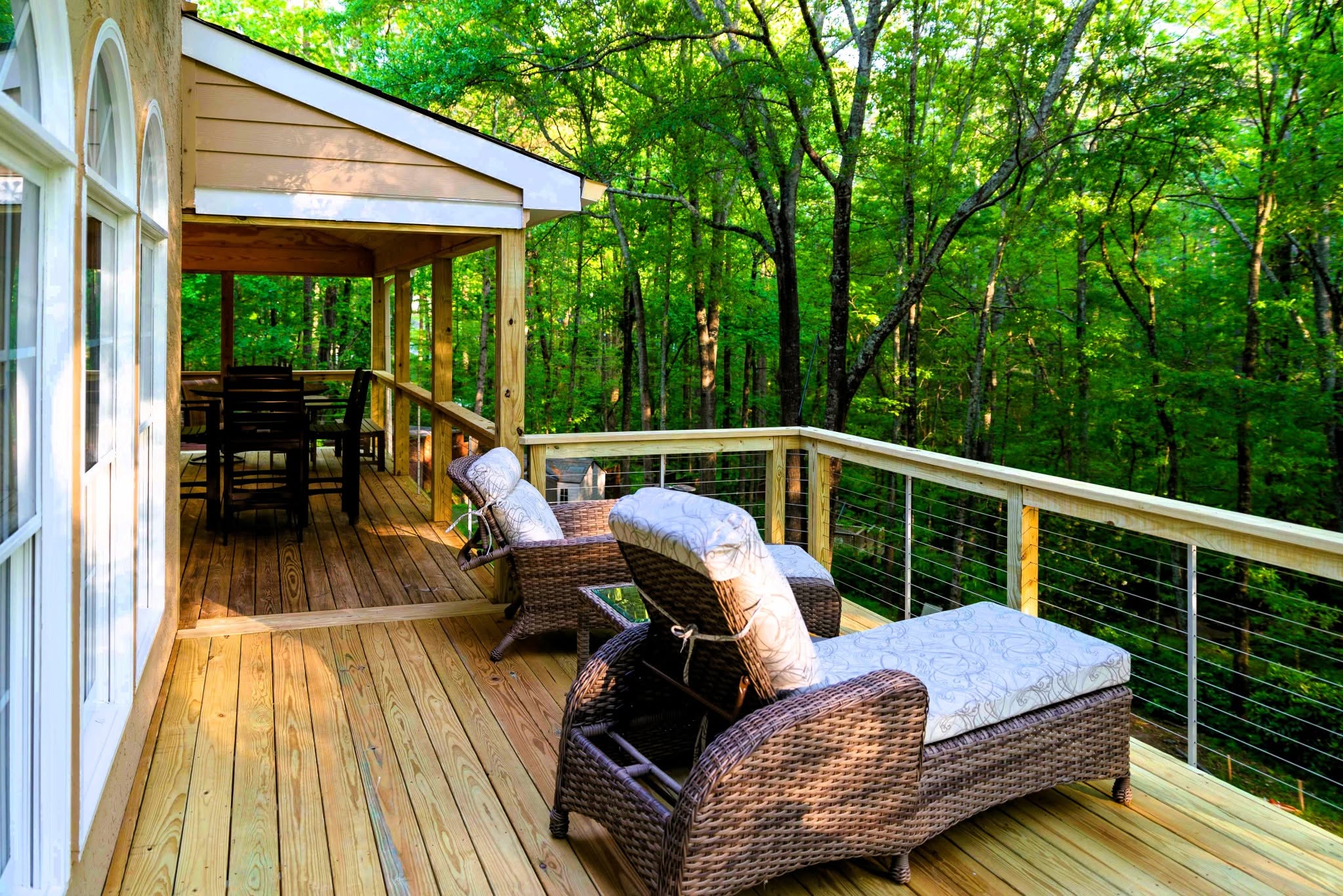
- Screened section: Enclosing part of the deck with screens and a roof.
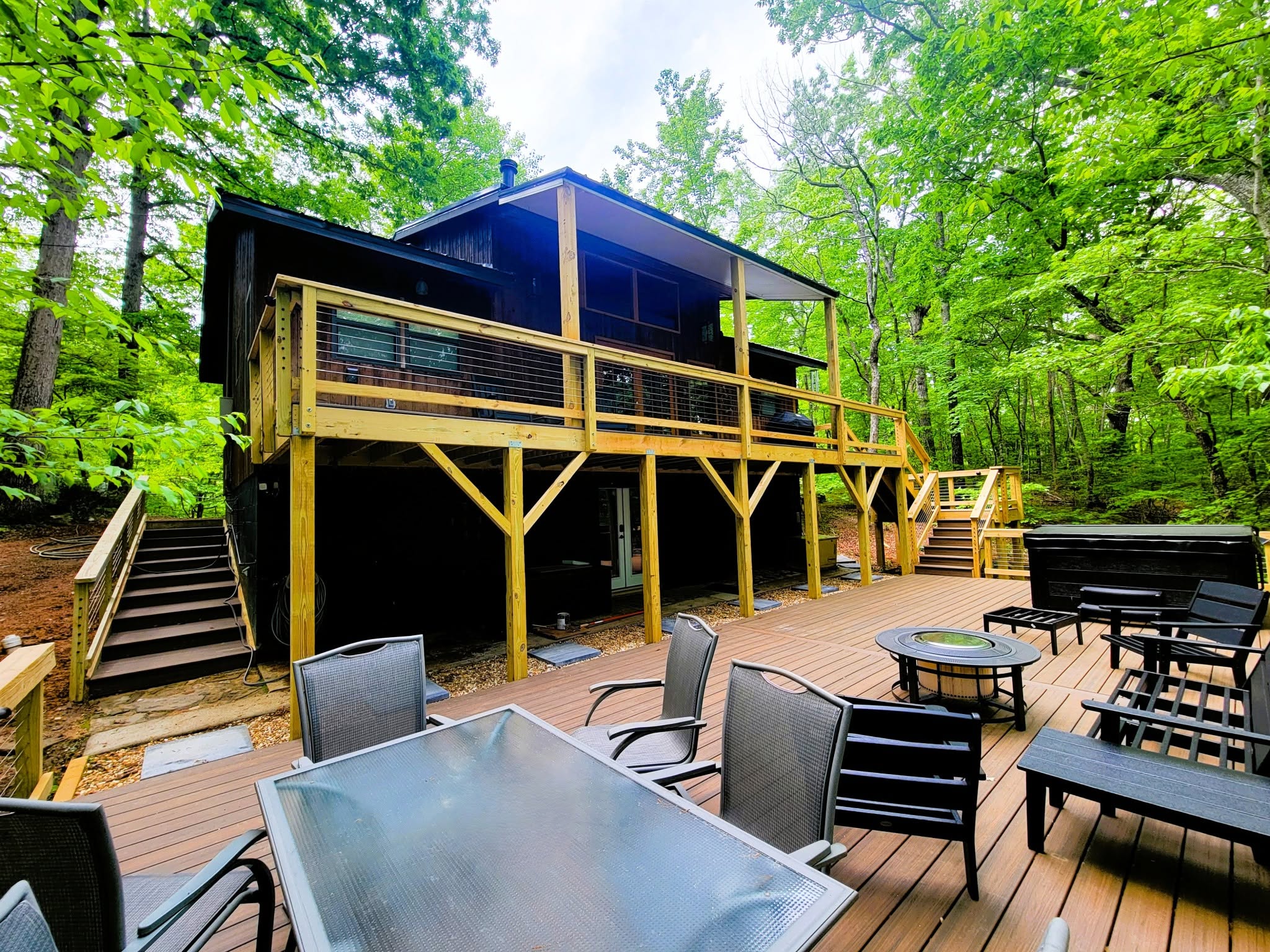
- Hot tub section: Reinforcing or adding framing for a spa.
Rules vary by county and city, so always confirm locally. When in doubt, ask before you build.
Some work on an existing deck usually does not need a permit. Staining, sealing, and cleaning are maintenance. Swapping a few damaged boards is usually treated as a repair. The line moves once you change the structure, the size, or the railings. Our permit guide covers where that line sits.
Do I Need a Permit to Add Stairs to My Deck?
In most cases, yes. New stairs add new footings, new stringers, and a new path people walk on. That makes them structural work, not maintenance.
Stairs also carry a long list of code rules. Riser height, tread depth, handrails, landings, and lighting all get checked. Our guide to deck stair code requirements lists every number.
Can You Extend an Existing Deck?
Yes, you can extend an existing deck when its frame is sound. The new section ties into the old one, so the old frame has to carry its share.
We start with a structural check of the existing deck. We look at the footings, posts, beams, joists, and ledger. If the old frame has rot or weak spots, we fix those first or plan around them.
The connection between old and new matters most. We tie new framing in with engineered connections, never face-nailed. The goal is one deck that reads as a single build, not two decks bolted together.
Matching old and new takes planning, too. Weathered wood and faded boards will not match brand-new decking on day one. Many homeowners resurface the old section at the same time, so the whole deck looks like one build. We walk through that choice in your quote.
Some additions need extra planning. A hot tub section needs framing designed for its load. Our guide on putting a hot tub on a deck covers the details. A second level on a slope needs taller posts and careful footing placement.
Does the Old Deck Have to Meet Current Code When You Add On?
It depends on your county and the scope of work. The new section must meet current code. The inspector may also look at where the new framing ties into the old deck.
If the connection point or the old ledger has problems, expect the inspector to flag them. That is one reason we check the existing deck before we design the addition. Fixing an issue during planning costs less than fixing it after a failed inspection.
Old railings are a common example. If the addition changes the railing layout, the new railing sections must meet today’s height and spacing rules.
How the Permit Process Works for an Addition
The process for a deck extension follows the same steps as a new deck:
- Plans: A drawing shows the addition, the framing, and how it ties into the existing deck.
- Application: The plans go to your county or city building department.
- Footing inspection: An inspector checks the footing holes before concrete goes in.
- Framing inspection: The inspector checks framing and connections before decking covers them.
- Final inspection: The inspector checks the finished deck, including railings and stairs.
Build the permit into your timeline. Review times vary by county and by season. We submit the plans and schedule each inspection, so you do not have to chase the county.
The footing inspection is an easy step to miss. Our guide to deck footing requirements explains what the inspector looks for.
What Happens If You Extend a Deck Without a Permit?
Extending a deck without a permit can lead to fines and even a required tear-out. It can also cause trouble when you sell your home.
Buyers and home inspectors often ask about permits for decks and additions. An unpermitted extension can delay a sale or force repairs on a deadline. Some counties allow a permit after the fact. That often means opening up finished work so the inspector can see it.
Planning a permit to extend a deck from day one is simpler and cheaper. It also gives you a record that the work was done right.
What to Expect When You Call
We start with a conversation about your deck and what you want to add. Tell us the size, the shape, and how you plan to use the new space. Photos of the existing deck and its framing help.
We check the existing structure first. Then you receive a detailed, itemized quote in writing. It shows the new framing, footings, decking, and any repairs to the existing deck as separate lines.
We file permits and meet inspectors on qualifying projects. HOA and architectural committee approvals stay with the homeowner. Our crew protects your lawn, landscaping, and home throughout the work.
Grow Your Deck the Right Way
North Georgia Elite Decks is a family-owned builder based in Jasper, serving North Georgia since 2007. On qualifying projects, we file the permit, meet the inspector, and build the addition.
Call or text (404) 662-2273 or request your quote online.
Free, no-obligation quote. Detailed, itemized, and in writing.