
Engineered Retaining Walls Built to Last
Retaining wall design and installation by North Georgia's premium, family owned hardscape team. Licensed and insured. Free onsite quote.
Properly engineered for drainage and load, not just stacked
5 year workmanship warranty, licensed and insured
Family owned and serving North Georgia since 2007
Get a Quote
Contact Us
We will get back to you as soon as possible.
Please try again later.
TRUST Us
Licensed & Insured
Family Owned Since 2007
5 Year Workmanship Warranty
Free Onsite Quote
Financing Available
5 Star Local Reviews
North Georgia's Retaining Wall Specialists
A retaining wall has one job: hold for decades without failing. The difference between a wall that lasts and one that bulges or leans is engineering and drainage, not how fast it goes up. As local retaining wall contractors, we build block and stone walls that are properly designed, drained, and reinforced for North Georgia's slopes and soil. Functional where it needs to be, beautiful where it shows.
Retaining Wall Services We Offer
Engineered block and stone retaining walls
Terraced and multi-tier walls for slopes
Seating walls and garden walls
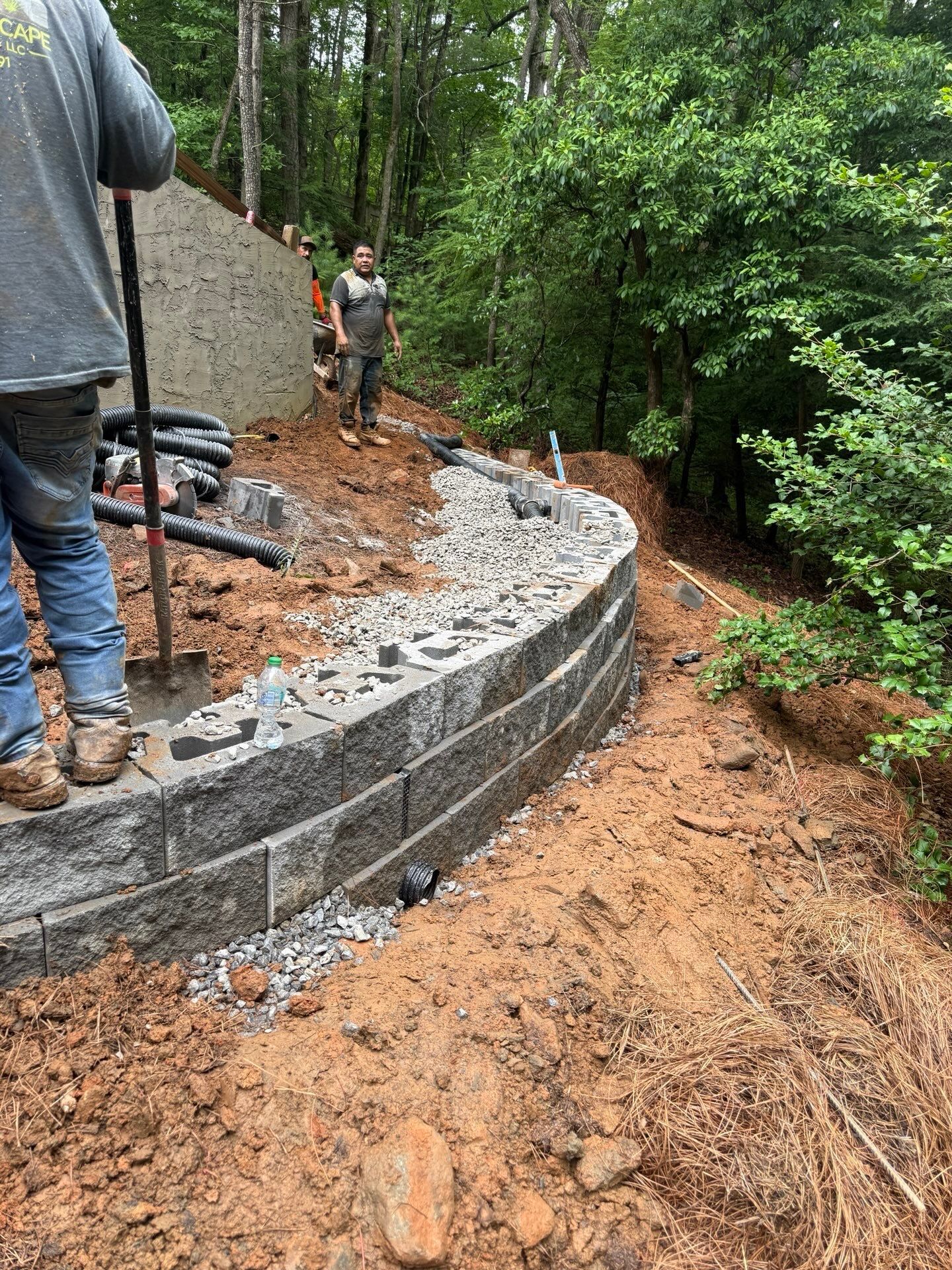
Drainage systems and proper backfill
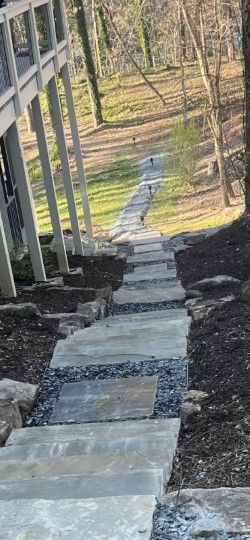
Steps and integrated hardscape transitions
Erosion and grading solutions
Why Choose Us for Your Retaining Wall
Built to hold for decades.
Engineered base, drainage, and reinforcement done right.
Local and family owned since 2007.
Direct accountability from the owner.
Design and build under one roof.
One team owns the outcome.
5 year workmanship warranty.
5 year workmanship warranty.
Licensed and insured.
Real protection on a structural project.
How Your Retaining Wall Project Works
See what our clients are saying

Momnt Technologies, Inc. arranges consumer loans used to purchase goods and services from its participating merchant businesses. All loans are originated by participating financial institutions. See a list of financial institutions at momnt.com/lending-partners.
Apply for Retaining Wall Financing
Contact Us
We will get back to you as soon as possible.
Please try again later.
Serving North Georgia
Building retaining walls in Big Canoe, Milton, Alpharetta, Woodstock, Canton, Cumming, Jasper, and surrounding areas. Call (877) 423-3257 to confirm your area.
Frequently Asked Questions
How much does a retaining wall cost?
Cost depends on height, length, material, drainage needs, and access. We provide a written quote after a free onsite assessment.
What type of retaining wall is best?
It depends on your slope, soil, and look. We build engineered block and natural stone walls and recommend the right system for your site.
Do you engineer for drainage?
Always. Drainage and proper backfill are the most common reasons walls fail. We build them in from the start.
How tall can a retaining wall be?
We build walls of many heights, including terraced systems for steep slopes. Taller walls may require additional engineering, which we handle.
Is the wall guaranteed?
Yes. 5 year workmanship warranty on our installation, plus manufacturer warranties on materials.
Are you licensed and insured?
Yes, fully licensed and insured, family owned since 2007.
Do you offer financing?
Yes, financing is available for qualified homeowners.
Need a Retaining Wall That Will Not Fail?
Get your free onsite quote from North Georgia's retaining wall experts.
Contact Us
We will get back to you as soon as possible.
Please try again later.